#FemDataSummit
About the Data Summit and Nafasi
An introduction to the Summit, the Nafasi programme and what this cohort was convened to do.
Summit report · Porto-Novo, Benin · 28–30 July 2026
Decolonizing data: architecting feminist digital futures in West Africa.
They arrived on Tuesday asking how a statistic becomes a law. They leave with eight policy briefs, a ratified Regional Feminist Data Agenda and a cross-border data collective that is already working.
The question in the room
Feminist activists, journalists, technologists, researchers, parliamentarians and funders came to Porto-Novo with one question: how does a statistic become a law?
Many arrived from grassroots organisations that rarely get a seat at regional convenings, and francophone delegates were prioritised deliberately because the evidence gap in this region is also a language gap.
This is what the Summit sounded like, in the words of the people who built it.
Watch the Summit
Press play to watch here on the page. Every session also opens on YouTube if you would rather watch it there.
#FemDataSummit
An introduction to the Summit, the Nafasi programme and what this cohort was convened to do.
Mapping the regional data landscape: existing assets and critical gaps
The normative frame: ACHPR Resolutions 657, 620 and 522, and the regional mandate they place on data practitioners.
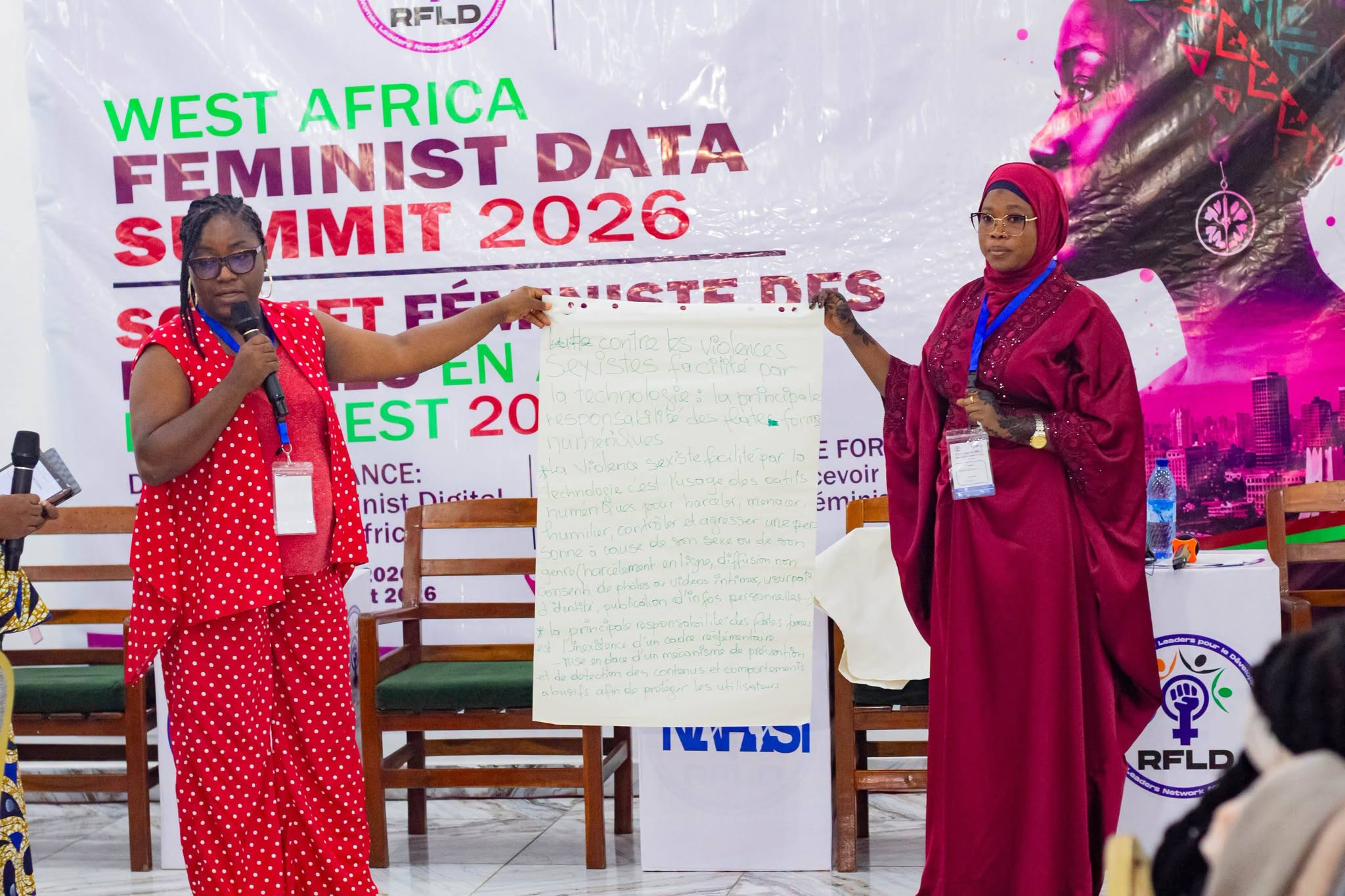
Digital censorship & TFGBV · media narratives and the reach gap
Digital censorship, TFGBV and closing civic space: what the evidence shows, and where it fails to reach decision-makers.
Track working sessions
Track 1: censorship & shutdowns · Track 2: TFGBV · Track 3: media freedom & environmental defenders · Track 4: decolonising data & AI.
What are the main methodological and safety risks in collecting data on this theme, and how do we mitigate them? What one legislative, regulatory or institutional gap should this track’s policy brief target?
Digital protection
Rotating skills stations open to all delegates: device hygiene, account hardening, secure communications.
Afro-feminist solidarity in practice: mechanisms, accountability, cross-border care
Protection frameworks, threat models and advocacy pathways for women human rights defenders in digital space.
Urgent shifting of the ecosystem
Funding diversification, and what it will take for resources to reach grassroots and francophone organisations.
The record
Day 1 · Tuesday 28 July
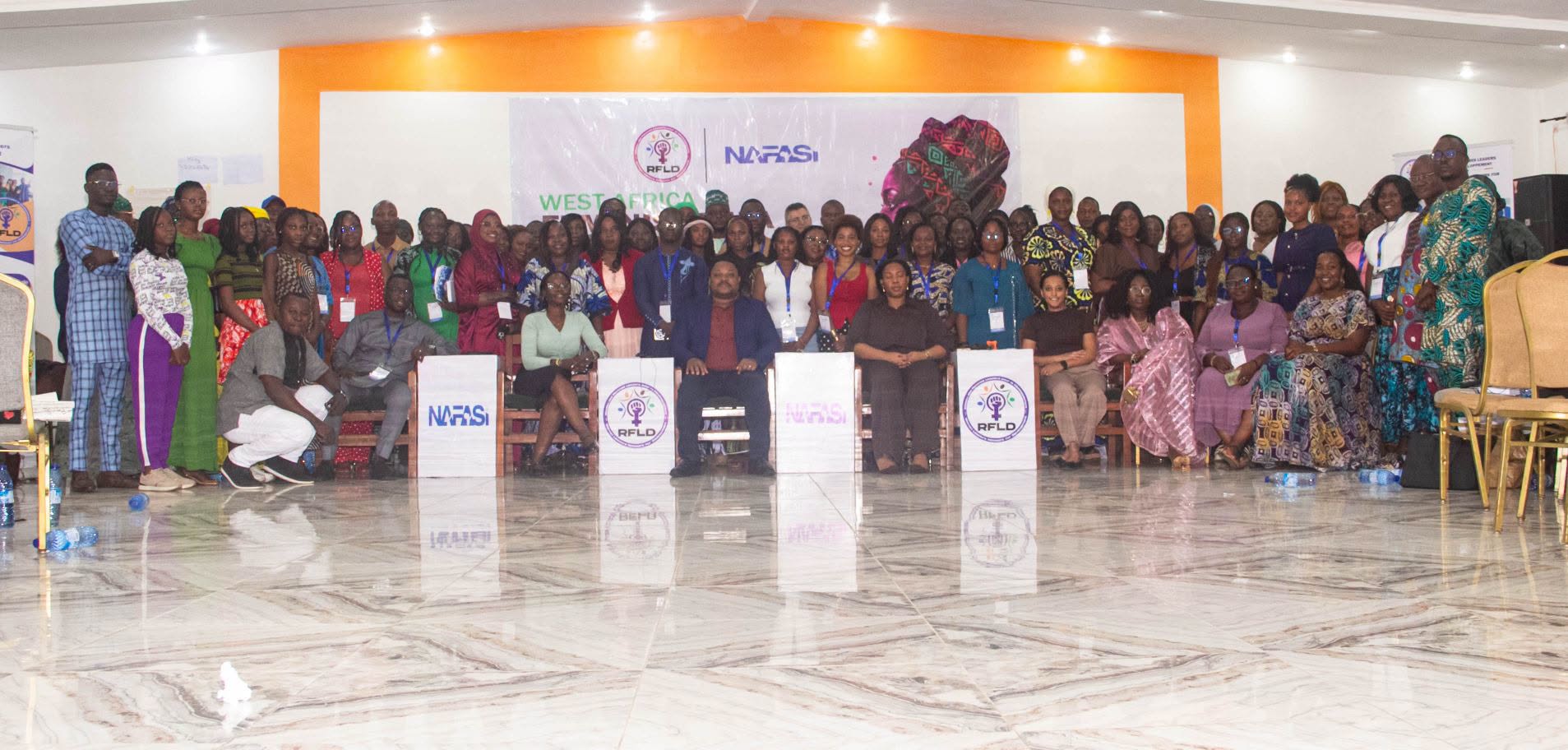
Some one hundred delegates from across West Africa opened three days of work under the theme “Decolonizing Data: Architecting Feminist Digital Futures in West Africa.”
Plenary I · From statistics to legislation set the normative frame: ACHPR Resolutions 657, 620 and 522 and the mandate they place on data practitioners, with Selamawit Tezera (Pollicy), Joel Noumonvi (Vobodo) and John Gbenagnon (RFLD).
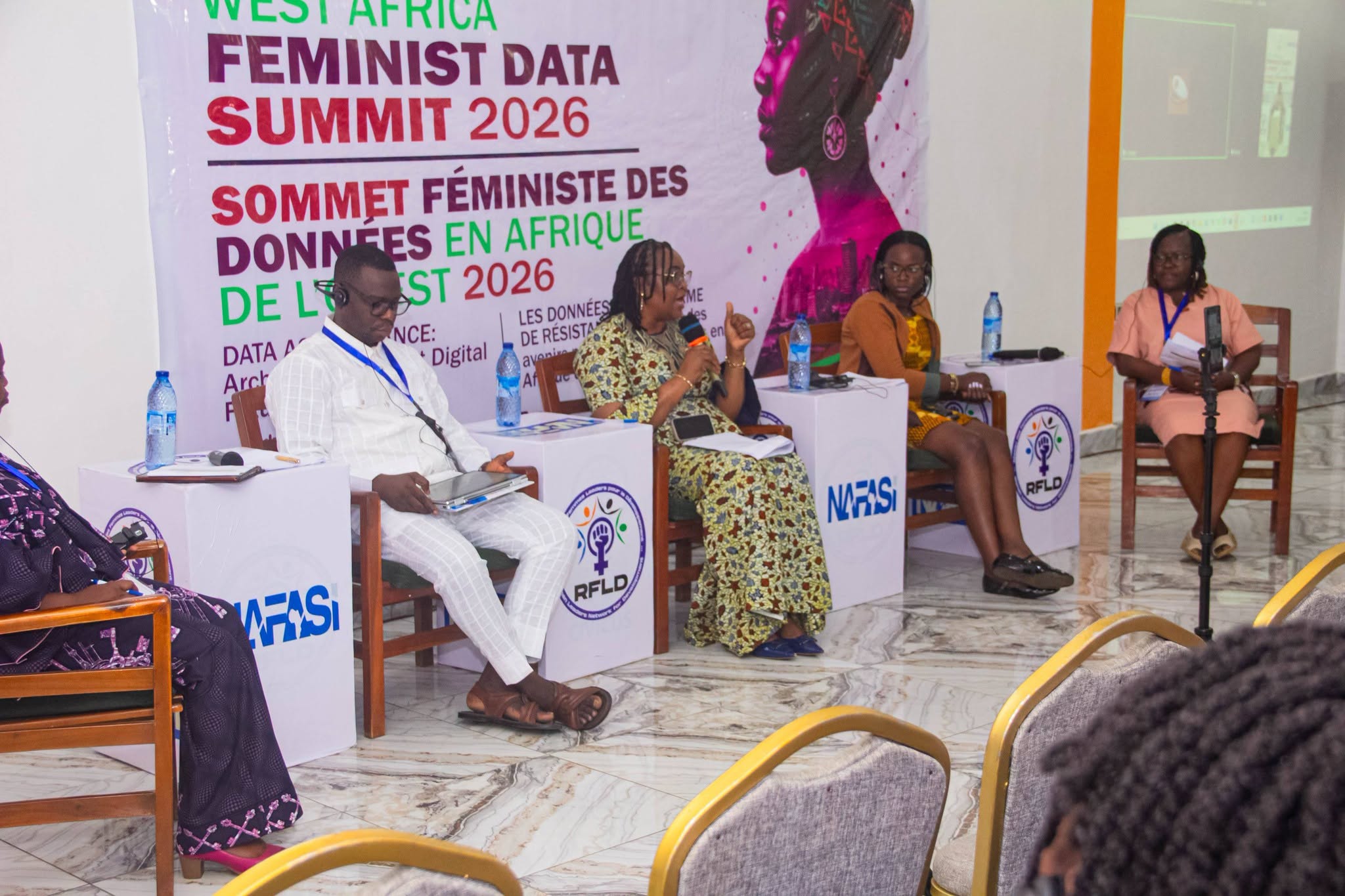
Plenary II · The state of feminist data in West Africa examined digital censorship, TFGBV and reprisals against defenders, with Ms. Bakare Simbiat (Naija Feminist Media).
Tracks 1 to 4 then met in parallel, covering censorship and internet shutdowns, TFGBV, press freedom and environmental defenders, decolonising data and AI, facilitated by Laurence Ahissou (SID), Kodjo Da Silveria (JAIE) and Ginette Bonou (CJD Ayessi).
The day closed on philanthropy and funding, with David Barnard, Erin Bresnahan (Avomotion) and Bella Zevounou (WOLSI), on what it will take for resources to actually reach grassroots and francophone organisations.
Feminist organisations must not merely be consumers of data, but producers of official data that moves legislation.
Day 2 · Wednesday 29 July
Plenary III addressed gender-responsive digital protection for women and persons with disabilities: protection frameworks, threat models and advocacy pathways for WHRDs online. Aneth Kemanzi (Pollicy), Heuleche Tognonmegni (RFLD) and Ella Wama led a session that returned repeatedly to one idea. Afro-feminist solidarity works only when it is built as a mechanism, with clear responsibilities and real accountability behind it.
Tracks 5 to 8 met in parallel, with an intervention from Hon. Rémy Ngoy Lumbu on the continental mandate and what it expects of this cohort.
Joël Noumonvi ran a hands-on digital security workshop covering device hygiene, strong authentication and secure communications. Several delegates left the room better protected than when they walked in.
In the afternoon the Special Rapporteur walked the room through the ACHPR’s alert and referral mechanisms: how a case actually reaches the Commission, which protective measures it can activate, and how those connect with United Nations mechanisms.
The day closed with drafting sessions. Each thematic track produced a one-page brief targeting a specific legislative, regulatory or institutional gap, the eight building blocks of the Regional Feminist Data Agenda.
A regional mechanism is not activated by outrage. It is activated by a case file: evidence, dates, documentation that holds. Documenting well does not expose defenders. It protects them.
Day 3 · Thursday 30 July
The final day was about turning three days of work into an agenda with owners, timelines and money behind it.
Plenary IV opened the morning. The eight policy briefs were presented in full, and the room worked through where they reinforce one another, where their recommendations compete for the same policy space, and how they should be sequenced. Some are ready to be advocated immediately; others need a longer evidence-gathering runway, and delegates were candid about which was which. Out of that came three priorities for the Regional Feminist Data Agenda 2026–2028, each with a named owner and a mandate.
Parallel sessions followed on resources and networks. Delegates then launched the cross-border encrypted data collective, agreeing structure, secure channels, membership commitments and rapid-response protocols. The hardest questions were the right ones: what triggers a rapid response, who decides, within what timeframe, and how data moves between members without exposing sources or the defenders behind them.
The Regional Feminist Data Agenda was ratified, the post-summit evaluation completed, and the Summit closed with the award of certificates.
One hundred delegates arrived on Tuesday with the question of how a statistic becomes a law. They leave with eight briefs, a ratified regional agenda, a functioning collective and a set of commitments carrying names and dates. The work now moves out of that room and into nine countries.
Outcomes
One per thematic track, each targeting a named legislative, regulatory or institutional gap.
Three priorities for 2026–2028, each with an owner and a mandate.
Structure, secure channels, membership commitments and rapid-response protocols.
Carried home into nine countries.
Thank you
Our thanks to every delegate, facilitator and partner who made these three days possible, and to Hon. Rémy Ngoy Lumbu for a mandate that stayed in the room rather than passing through it.
The work moves home now.
Visit the Summit page