ACHPR Observer Status No. 553 · US 501(c)(3) Equivalent
Languages
English & French
Simultaneous interpretation
The community convening in Porto-Novo
A letter to friends, allies & changemakers
The West Africa Feminist Data Summit 2026 convenes from 28 to 30 July 2026 at Hôtel Les Oliviers, Porto-Novo, Republic of Benin — a venue that removes the visa barrier entirely for every African delegate.
Three days. One hundred delegates. One coordinated continental advocacy infrastructure.
"Decolonizing Data: Building Feminist Digital Futures in West Africa."
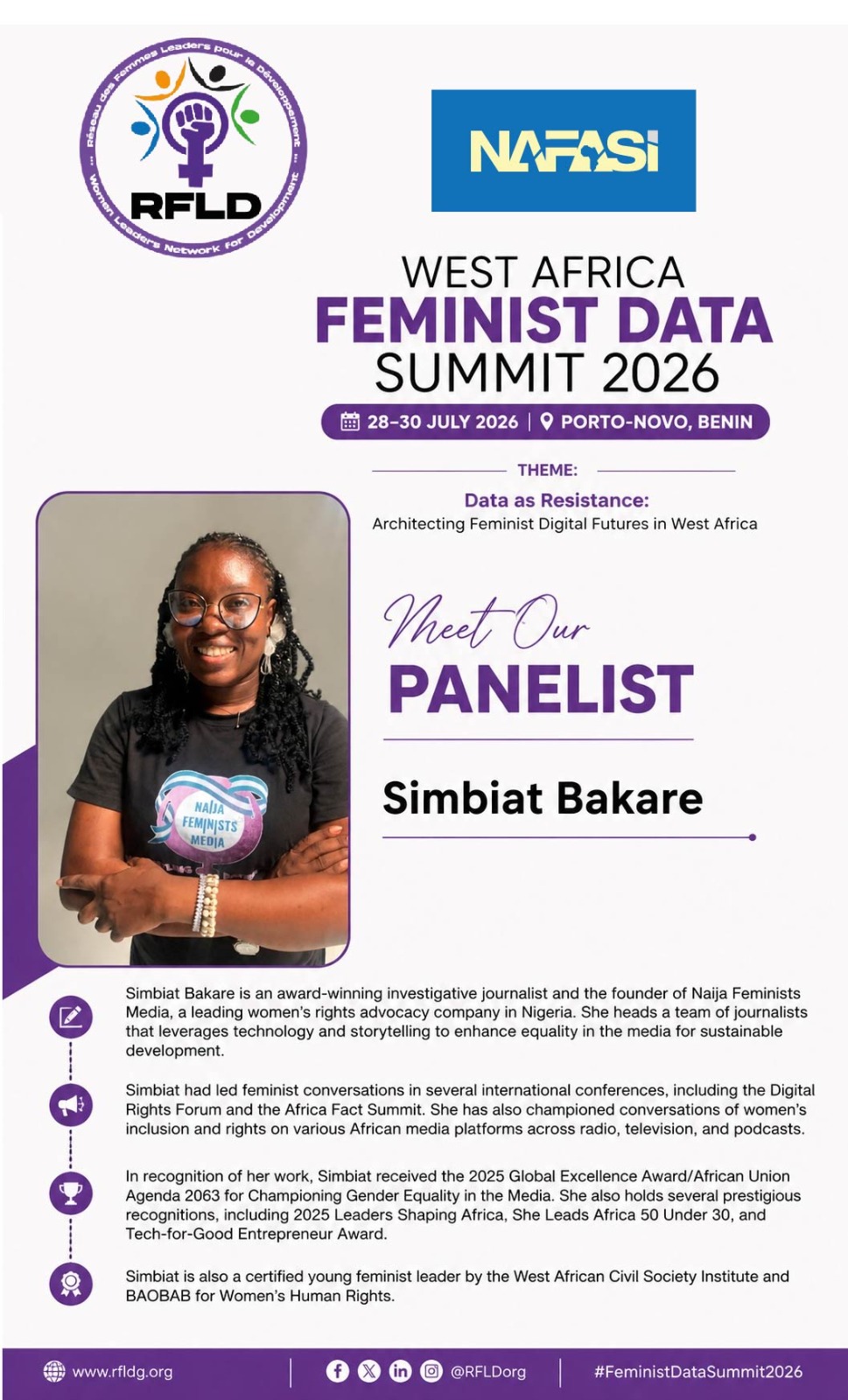
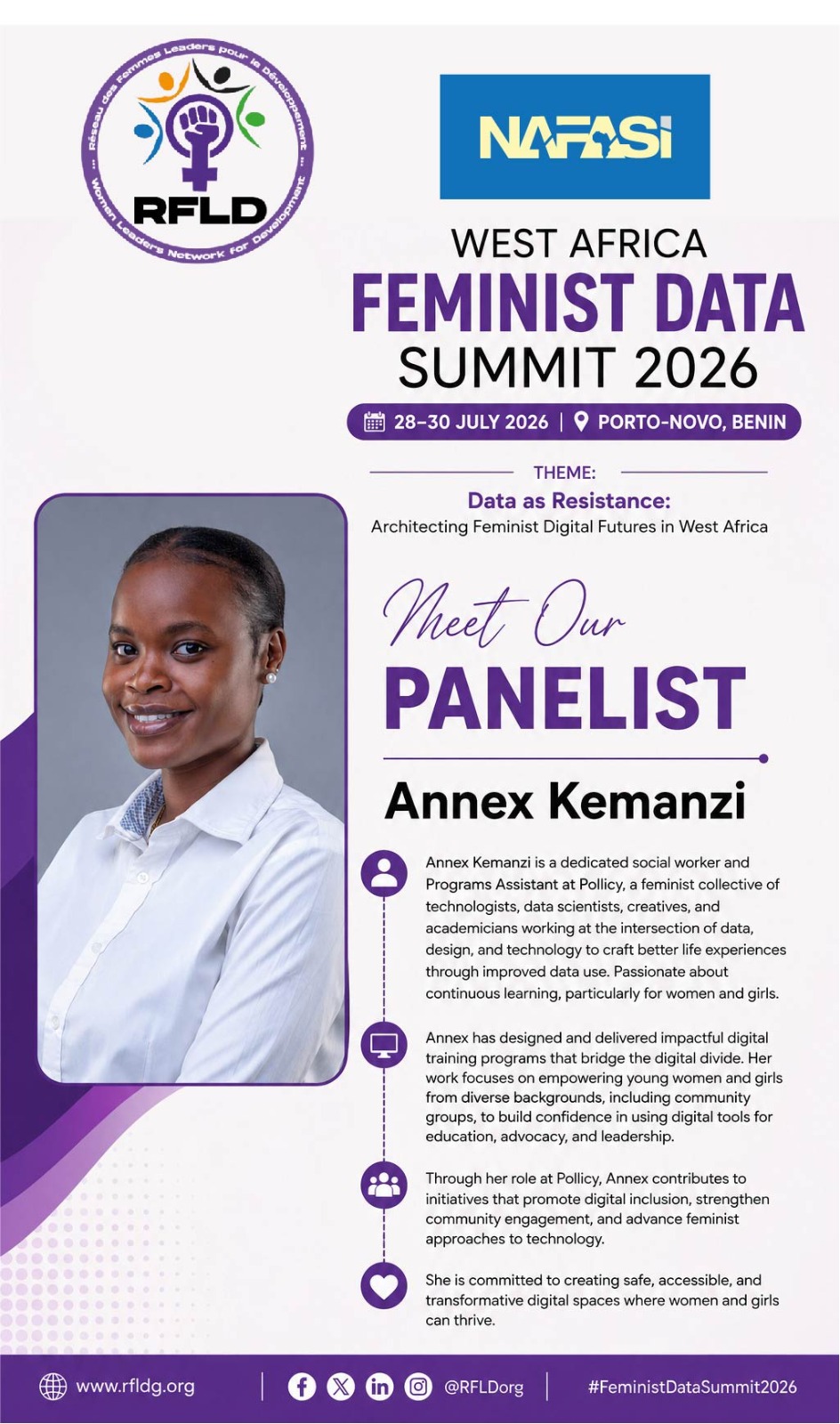
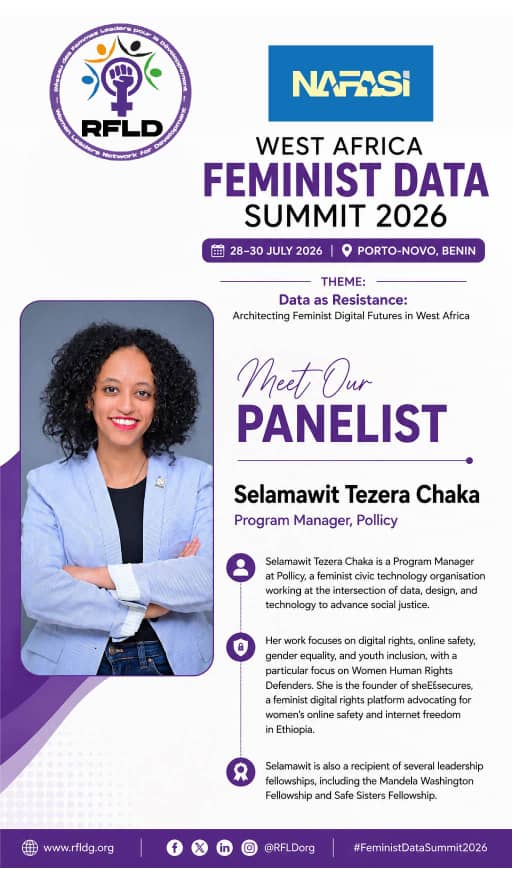
The Summit brings together approximately 100 feminist activists, data journalists, civic technologists, policy researchers, parliamentarians, environmental defenders, academic researchers, and women human rights defenders from across the region — to translate fragmented data work into coordinated continental advocacy. Women human rights defenders will constitute at least half of the cohort, and priority is given to grassroots organisations and francophone delegates from the West African region.
Featured address
Introducing the Summit's main speaker.
Watch the introduction of the main speaker of the West Africa Feminist Data Summit 2026 — and get a first sense of the conversation waiting for you in Porto-Novo.
The Summit operationalises three landmark resolutions of the African Commission on Human and Peoples' Rights.
657
Resolution 657 · 2026
Access to environmental information & healthy environment
Calls on African states to uphold access to climate and environmental information — including safeguarding journalists reporting on environmental harm and resource exploitation.
620
Resolution 620 · 2024
Data access as a tool for human rights
Mandates the Special Rapporteur to develop normative standards on data collection, storage and processing — transparency, data justice, AI accountability.
522
Resolution 522 · 2022
Protecting women against digital violence
Addresses the rise of gender-based violence including cyber-harassment, calling on states to update legislation to protect women in digital spaces.
An Afrofeminist pedagogy
Eight thematic tracks. Woven, not parallel.
Each track connects directly to one or more ACHPR resolutions and produces a chapter of the Regional Feminist Data Agenda. Tracks 1–4 run in parallel on Day 1; Tracks 5–8 on Day 2.
Intersectional data — rural, queer & disabled realities
Round B · Day 2
Provisional programme · Draft for circulation
Three days. One room. One agenda.
Sessions combine plenary briefings, moderated panels, hands-on working sessions, policy-brief drafting, case-study peer learning, lightning exchanges, and action planning — in line with the methodology set out in the Summit Concept Note (Ref. RFLD/WAFDS.2026/CN.2, Rev.). Simultaneous English–French interpretation is provided in the plenary hall and the two main track rooms. Times are indicative; the final agenda will be published in mid-July 2026. This convening is delivered through RFLD's continental data infrastructure and contributes to Pillar 1 (Policy & Governance) of the NAFASI project.
Day 1 · Tuesday, 28 July 2026
Foundations: mandates, landscapes, and the normative frame
Thematic focus — Digital rights policy and governance landscapes (national, regional, continental); civic space governance; introduction to Tracks 1–4.
08:00 – 08:45
Registration & welcome coffee
Logistics team
08:45 – 09:30
Opening ceremony & welcome remarks
RFLD leadership; host-country and ACHPR-mandate representatives
09:30 – 10:00
Summit orientation
Objectives, working methods, expected outputs, and baseline assessment of delegates.
Summit coordination team
10:00 – 10:15
Group photograph & break
10:15 – 11:30
Plenary I: From statistics to legislation
The normative frame: ACHPR Resolutions 657, 620 and 522, and the regional mandate they place on data practitioners. Session topic: mapping the regional data landscape — existing assets and critical gaps.
Guiding questions
What do ACHPR Resolutions 657, 620, and 522 actually require of States, and where does data evidence fit in enforcing those requirements?
Which datasets on digital rights and gendered harms already exist in West Africa, and who owns, controls and finances them?
Where are the most critical data gaps (thematic, geographic and linguistic) that keep violations invisible to policymakers?
What does it take to turn a statistic into a legislative or regulatory proposal a parliament can act on?
How do we ensure feminist and grassroots organisations are producers of official evidence, not only consumers of it?
What quick wins can this cohort commit to that would close one priority data gap within twelve months?
Policy & governance specialists, RFLD
11:30 – 11:45
Break
11:45 – 13:00
Plenary II (panel): The state of feminist data in West Africa
Digital censorship, TFGBV and closing civic space: what the evidence shows, and where it fails to reach decision-makers. Panel themes: digital censorship & TFGBV — what the data shows; media narratives and the reach gap to decision-makers; closing civic space and reprisals against defenders.
Guiding questions
What does the most recent evidence tell us about the scale and patterns of digital censorship and TFGBV in West Africa?
Whose experiences are systematically missing from that evidence, and what does this mean for the credibility of our claims?
Why does existing data so often fail to reach or persuade decision-makers, and where exactly does the chain break?
What role do media narratives play in translating data into public pressure, and how can feminist media strengthen that translation?
How are reprisals against defenders documented today, and how can documentation protect rather than expose them?
Which alliances (media, mandate-holders, researchers, platforms) would most quickly widen the reach of feminist evidence?
Three resource persons + moderator
13:00 – 14:00
Lunch
14:00 – 15:30
Track working sessions: Round A (Tracks 1–4 in parallel)
Hands-on introduction to each track: tools, diagnostics and datasets. Track 1: censorship & shutdowns · Track 2: TFGBV · Track 3: media freedom & environmental defenders · Track 4: decolonising data & AI.
Guiding questions
Which tools and diagnostics presented in this track are immediately usable in your own context, and what would adaptation require?
What data does your organisation already hold that could feed this track's evidence base?
What are the main methodological and safety risks in collecting data on this theme, and how do we mitigate them?
Which actors (state, platform, donor, community) must be moved for change on this theme, and what evidence moves each of them?
What would a shared regional indicator set for this track look like?
What one legislative, regulatory or institutional gap should this track's policy brief target?
Track facilitators
15:30 – 15:45
Break
15:45 – 16:45
Philanthropy and funding
Urgent shifting of the ecosystem: funding pipelines for feminist and digital-rights work in West Africa.
Guiding questions
How is the funding ecosystem for feminist and digital-rights work in West Africa shifting, and which shifts are most urgent to respond to?
What share of current funding actually reaches grassroots and francophone organisations, and what blocks the pipeline?
Which financing models best fit feminist data work: flexible core support, participatory grant-making, or pooled funds such as the WAFF Fund?
How can data itself strengthen the case to funders, and what evidence do funders say they need?
What do equitable donor–grantee relationships look like in practice, beyond the rhetoric of shifting power?
What concrete funding commitments or introductions can be made in this room before the Summit closes?
Facilitated breakout groups by country
16:45 – 17:15
Day 1 wrap-up & reflection
Facilitation team
Day 2 · Wednesday, 29 July 2026
Practice: protection, skills, and platform accountability
Thematic focus — Gender-responsive digital protection and advocacy for WHRDs; practical digital security skills; introduction to Tracks 5–8; drafting of track policy briefs.
08:30 – 09:00
Recap of Day 1 & energiser
Facilitation team
09:00 – 10:15
Plenary III: Gender-responsive digital protection for WHRDs
Protection frameworks, threat models and advocacy pathways for women human rights defenders in digital space. Session topic: Afro-feminist solidarity in practice — mechanisms, accountability, and cross-border care.
Guiding questions
What distinguishes gender-responsive digital protection from generic cybersecurity approaches?
What do threat models for WHRDs in our contexts look like, and how do offline and online risks compound each other?
What mechanisms of afro-feminist solidarity and cross-border care already exist, and where are their accountability gaps?
How do we resource care and protection without turning defenders into passive beneficiaries?
Which protection frameworks (organisational, national, regional) can WHRDs actually invoke today?
What advocacy pathways can turn individual protection cases into systemic change?
GESI specialist, RFLD
10:15 – 10:30
Break
10:30 – 12:00
Track working sessions: Round B (Tracks 5–8 in parallel)
Featured input: the ACHPR mandate, the continental framework for the protection of defenders, and expectations of the cohort. Aim: ground the cohort in the ACHPR mandate and give every participant a clear reading of her rights and of what these three days are expected to deliver.
Guiding questions
What exactly is the mandate of the ACHPR Special Rapporteur, and what can the mandate concretely do, and not do, for a defender at risk?
What obligations does the continental framework place on our States for the protection of human rights defenders?
What do we expect, individually and collectively, from these three days, and how do we connect them to the work each of us is already doing on the ground?
How can data and documentation produced by feminist organisations strengthen cases brought to the Special Rapporteur?
Where has the continental protection framework already worked for defenders in West Africa, and what made those cases succeed?
What does the ACHPR mandate expect of States, and of civil society, between sessions, beyond periodic reporting?
Track facilitators
12:00 – 13:00
Hands-on lab: practical digital security & account protection
Rotating skills stations open to all delegates: device hygiene, account hardening, secure communications.
Guiding questions
What is your current device and account hygiene baseline, and which gaps expose you most today?
Which account-hardening steps (strong authentication, recovery settings, session control) can you complete before leaving this room?
When is a secure communication channel genuinely necessary, and which tool fits which threat scenario?
How do you assess whether an app, platform or service can be trusted with defenders' data?
What should you do in the first hour after a suspected compromise of a device or account?
How will you transfer these practices to colleagues and communities once back home?
Digital protection specialists
13:00 – 14:00
Lunch
14:00 – 15:15
ACHPR alert & referral mechanisms
Alert and referral mechanisms of the ACHPR, regional protection measures, and articulation with UN mechanisms. Aim: master the ACHPR's alert and referral mechanisms, and how they articulate with UN mechanisms, in order to respond when a defender is under threat.
Guiding questions
Which signals should trigger an alert, and at what point should a regional or UN mechanism be seized?
In concrete terms, how is a case brought before the ACHPR, and what protection measures can it activate?
How do regional protection measures articulate with UN mechanisms?
What evidence and documentation standards make an alert credible and actionable for regional mechanisms?
How can organisations prepare in advance of a crisis, so that referral to the ACHPR is fast when a defender is threatened?
What follow-up can be expected after a referral, and how do we hold mechanisms accountable for their response?
Facilitator
15:15 – 15:30
Break
15:30 – 16:45
Policy-brief drafting sessions
Each track drafts a one-page policy brief on a legislative, regulatory or institutional gap. These briefs are the building blocks of the regional data agenda.
Guiding questions
What single legislative, regulatory or institutional gap will your track's brief target, and why this one first?
Who is the primary decision-maker audience for the brief, and what does that audience already believe?
What is the strongest evidence available to support the brief's core claim, and where is it weakest?
What concrete, feasible recommendation does the brief make, and who is accountable for implementing it?
How does the brief reflect the experiences of grassroots and francophone constituencies?
What advocacy moment (session, review, anniversary, budget cycle) should the brief be timed to?
Track rapporteurs
16:45 – 17:15
Lightning sessions & Day 2 wrap-up
15-minute rapid presentations of tools, organisations and frameworks, followed by reflection.
Volunteer presenters; facilitation team
Day 3 · Thursday, 30 July 2026
Consolidation: the regional agenda, the collective, and resources
Thematic focus — Consolidation and ratification of the Regional Feminist Data Agenda; launch of the cross-border data collective; resource-mobilisation and sub-grant orientation.
08:30 – 09:00
Recap of Day 2 & energiser
Facilitation team
09:00 – 10:30
Plenary IV: Synthesis of track outcomes
Presentation of the eight draft track policy briefs and consolidation of recommendations into the draft Regional Feminist Data Agenda.
Guiding questions
What common threads run across the eight track briefs, and where do they reinforce one another?
Where do track recommendations conflict or compete for the same political space, and how should they be sequenced?
Which recommendations are ripe for immediate advocacy, and which require longer-term evidence building?
What should the Regional Feminist Data Agenda name as its top three priorities for 2026–2028?
Who carries each priority forward after the Summit, and with what mandate?
How will progress on the Agenda be measured and reported back to the cohort?
Rapporteur-General + track rapporteurs
10:30 – 10:45
Break
10:45 – 12:00
Parallel sessions: resources & networks
(a) Donor & resource-mobilisation roundtable: funding pipelines to grassroots initiatives, including the WAFF Fund · (b) Sub-grant orientation: process & compliance for prospective applicants · (c) Peer network design lab.
Guiding questions
Which funding pipelines, including the WAFF Fund, are open to your organisation in the next twelve months?
What compliance and process requirements do sub-grants involve, and how do you prepare for them now?
What makes a peer network durable after the convening ends: governance, cadence, or shared work?
What can your organisation offer the network, not only ask of it?
How should resources flow within the network to prioritise grassroots and francophone members?
What is the first joint activity the network could deliver within ninety days?
RFLD programmes & finance teams
12:00 – 13:00
Lunch
13:00 – 14:15
Launch of the cross-border encrypted data collective
Structure, secure communication channels, membership commitments and rapid-response protocols.
Guiding questions
What problem does the collective solve that existing networks and platforms do not?
What membership commitments (contribution, confidentiality, response) are members ready to make?
Which secure channels and protocols will the collective use, and who administers them?
How does data flow into and out of the collective without exposing sources and defenders?
What triggers the rapid-response protocol, and who decides, within what timeframe?
How is the collective governed across borders and languages: decisions, membership, disputes?
Facilitation team
14:15 – 14:30
Break
14:30 – 15:15
Ratification of the Regional Feminist Data Agenda
Post-Summit assessment & feedback.
Summit coordination team
15:15 – 16:00
Closing ceremony: certificates, reflections & the way forward
Approximately 100 delegates drawn from eight target audiences: feminist activists, data journalists, civic technologists, policy researchers, parliamentarians, environmental defenders, academic researchers, and donor representatives. Women human rights defenders constitute at least half of the cohort; priority is given to grassroots organisations and francophone delegates.
Guidance for facilitators & panelists
Each thematic input runs 15–20 minutes and remains practice-oriented; the Summit privileges working knowledge over keynote performance. Session notes and slides are submitted to the coordination team at least five working days before the Summit for interpretation preparation in both working languages.
Assessment & certification
A baseline assessment is completed at orientation on Day 1 and a post-Summit assessment on Day 3. Certificates of participation are issued at the closing ceremony.
Direct points of contact
Speak to the team directly.
For any question on registration, travel, or your accommodation booking — the coordination team is your direct point of contact at RFLD.
RFLD — Réseau des Femmes Leaders pour le Développement (Women Leaders Network for Development) is a pan-African feminist network combining legislative advocacy, community organising, re-granting, and open-data tools — delivered through six integrated fields of intervention across 35+ African countries.
Certified US 501(c)(3) Public Charity Equivalent by NGOsource · ACHPR Observer Status N°553 · Member of the ACHPR Special Rapporteur Working Group on Human Rights Defenders.
Support the work that brings everyone to the table.
If this resonates, forward this page and amplify on social with #FemDataSummit2026. Your contribution sustains the convening of grassroots feminist defenders at the table where decisions are made — and underwrites the visa-free, translation-equipped, fully-sponsored seats that make this Summit possible.