

Policy briefNote politique
Defending without being exposedDéfendre sans être exposée
Protecting women human rights defenders.Protéger les défenseures des droits humains.
NGO Forum ahead of the 89th Ordinary Session of the African Commission, Dakar, 2026Forum des ONG en amont de la 89e session ordinaire de la Commission africaine, Dakar, 2026

Digital risksRisques numériques
Online threats are risingLes menaces en ligne augmentent
Technology-facilitated violence targets women defenders.Les violences facilitées par la technologie visent les défenseures.
WLICT national consultation workshop, Abuja, 2026Atelier national de consultation WLICT, Abuja, 2026

African CommissionCommission africaine
Recommendations for statesDes recommandations aux États
Grounded in African human rights law.Fondées sur le droit africain des droits humains.
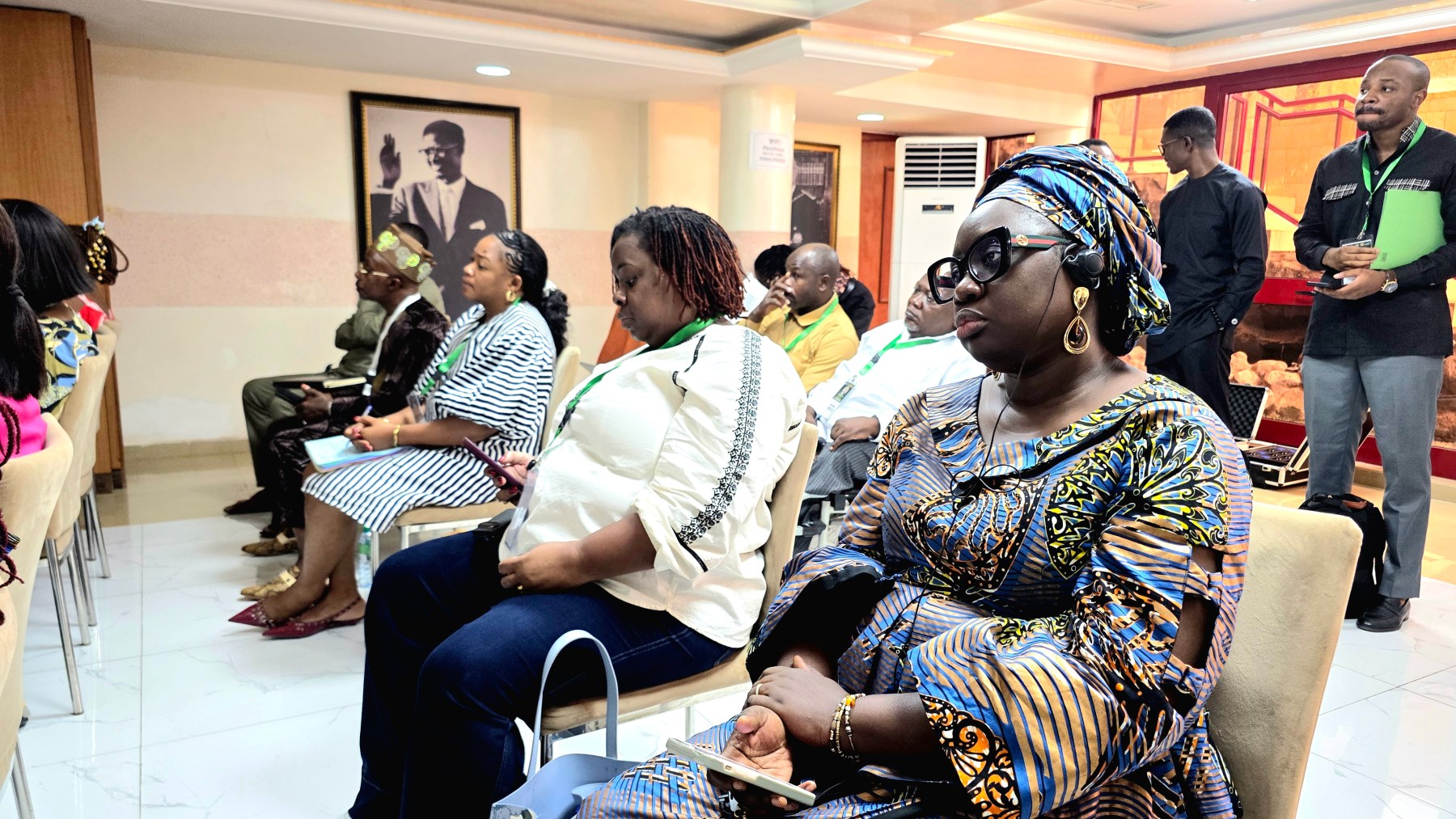
RFLD at the 89th Ordinary Session of the African Commission, Dakar, 2026Le RFLD à la 89e session ordinaire de la Commission africaine, Dakar, 2026
SafeguardsGaranties
Protection that worksUne protection qui fonctionne
Practical measures for organisations.Des mesures pratiques pour les organisations.
RFLD side event, 89th Ordinary Session of the African Commission, Dakar, 2026Événement parallèle du RFLD, 89e session ordinaire de la Commission africaine, Dakar, 2026

ReadLire
Read and share the briefLisez et partagez la note
Free in English and French.Gratuite en français et en anglais.
RFLD network gathering, 2026Rencontre du réseau RFLD, 2026
Why this matters nowPourquoi maintenant
The urgent need, and how we respondL’urgence, et notre réponse
Why it is urgentPourquoi c’est urgent
Women who defend rights face growing threats, online and offline.Les femmes qui défendent les droits font face à des menaces croissantes, en ligne et hors ligne.
Why RFLDPourquoi le RFLD
RFLD draws on its network and its Observer Status N°553 at the African Commission.Le RFLD s’appuie sur son réseau et son statut d’observateur n°553 auprès de la Commission africaine.
How we respondComment nous agissons
The brief sets out concrete protections for states, funders and organisations.La note présente des protections concrètes pour les États, les bailleurs et les organisations.
Protection delayed leaves defenders exposed.Une protection tardive laisse les défenseures exposées.
Policy brief: Defending without being exposed. Protecting women human rights defenders in AfricaNote d’orientation : défendre sans s’exposer. Protéger les femmes défenseures des droits humains en Afrique
Recommendations to the African Commission, States and funders from the panel on women human rights defenders at the 89th Ordinary Session of the ACHPR, Dakar, 12 October 2026.
Last updated · November 5, 2026

Policy brief · RFLD · November 2026
Women who support survivors of sexual exploitation, abuse and harassment are doing the work of human rights defenders, yet the law rarely recognises them and grant budgets rarely cover their protection. This brief sets out what the African Commission, States and funders can do. It draws on the panel Defending without being exposed, held on 12 October 2026 on the main agenda of the 89th Ordinary Session of the African Commission on Human and Peoples’ Rights in Dakar, convened and chaired by Hon. Rémy Ngoy Lumbu, Special Rapporteur on Human Rights Defenders and Focal Point on Reprisals, and facilitated by RFLD with the support of the SEA-T programme implemented by GIZ on behalf of BMZ.
The problem in four points
- Recognition. A woman who accompanies a survivor to the police station or to court is often described as a volunteer, a relative or a troublemaker. Without recognition as a defender, protection does not apply.
- Reprisals. The people women report can be close to them: a local notable, an employer, a public official. The Commission still receives reports of arbitrary arrests, judicial harassment, smear campaigns and physical attacks. Defamation complaints cost the accuser little and can ruin a frontline organisation.
- Online violence. Online gender-based violence, recognised by the Commission in Resolution 522 (2022), follows activists into their homes and can quickly become offline danger.
- Civic space and funding. Registration rules, reporting obligations, limits on foreign funding and laws on cybercrime or public order add up. Protection costs such as security, legal support and psychosocial care are rarely eligible in standard grant budgets.
Summary of the recommendations in this brief.
Recommendations
To the African Commission on Human and Peoples’ Rights
- Recognise explicitly, in resolutions and in the work of the Special Rapporteurs, that women who support survivors of sexual violence at community level are human rights defenders.
- Through the Focal Point on Reprisals, follow up every report of reprisal against a woman who engaged with the Commission, and publish the follow-up.
- Use the study under Resolution 571 to assess how far national laws on associations, cybercrime and public order comply with the Guidelines on Freedom of Association and Assembly in Africa.
- Include guarantees for women defenders, including protection against online violence, in the draft African instruments under preparation.
To States
- Adopt or amend laws so that women defenders, including community workers and heads of local associations, are recognised and protected.
- Stop the use of defamation, cybercrime and public order laws against women who report abuse, and review registration and foreign-funding rules against the Commission’s Guidelines.
- Set up referral routes that respond within hours, in local languages, and that keep the identity of survivors and defenders confidential.
- Report on the protection of women defenders in periodic reports to the Commission and to the CEDAW Committee.
To funders
- Make protection costs an eligible budget line in every grant: security, legal support, digital safety and psychosocial care.
- Increase the share of funding against sexual exploitation, abuse and harassment that reaches organisations led by African women, and fund them directly and flexibly.
- Do not require visibility, logos or public reporting where they put partners at risk.
- Fund the regional mechanisms that support defenders, including the NGOs Forum and the work of the Special Rapporteur’s Support Group.

What RFLD will do
- Give the Support Group to the Special Rapporteur (Resolution 602) a documented account of recognition and reprisal patterns, drawn from cases registered with consent across RFLD’s network.
- Send funders recommendations on the eligibility of protection costs.
- Contribute to the study under Resolution 571.
- Make referral routes known, including RFLD’s French and Portuguese support desks on the Get Support page.

Watch and read
Watch the five interventions · Read the full panel report · African Digital Safety Compendium · West Africa legal scorecard 2026
Note de politique · Défendre sans s’exposer
Les femmes qui accompagnent les survivantes d’exploitation, d’abus et de harcèlement sexuels font le travail de défenseures des droits humains, mais la loi les reconnaît rarement et les budgets de subvention couvrent rarement leur protection. Cette note s’appuie sur le panel Défendre sans s’exposer, tenu le 12 octobre 2026 à l’ordre du jour principal de la 89e session ordinaire de la Commission africaine à Dakar, convoqué et présidé par l’Hon. Rémy Ngoy Lumbu, Rapporteur spécial sur les défenseurs des droits de l’homme, et facilité par le RFLD avec l’appui du programme SEA-T mis en œuvre par la GIZ pour le BMZ.
À la Commission africaine
- Reconnaître expressément comme défenseures les femmes qui accompagnent les survivantes au niveau communautaire.
- Assurer, par le Point focal sur les représailles, le suivi public de chaque cas de représailles.
- Évaluer, dans l’étude au titre de la Résolution 571, la conformité des lois nationales aux Lignes directrices sur la liberté d’association et de réunion.
- Inscrire des garanties pour les défenseures, y compris contre les violences en ligne, dans les projets d’instruments africains.
Aux États
- Reconnaître et protéger par la loi les défenseures, y compris les agentes communautaires et les responsables d’associations locales.
- Cesser d’utiliser les lois sur la diffamation, la cybercriminalité et l’ordre public contre les femmes qui dénoncent des abus.
- Mettre en place des circuits d’orientation qui répondent en quelques heures, en langues locales, et protègent l’identité des personnes.
- Rendre compte de la protection des défenseures dans les rapports périodiques.
Aux bailleurs
- Rendre éligibles dans chaque subvention les coûts de protection : sécurité, appui juridique, sécurité numérique, soutien psychosocial.
- Augmenter la part des financements qui parvient directement et de façon flexible aux organisations dirigées par des femmes africaines.
- Ne pas exiger de visibilité ni de logos lorsque cela expose les partenaires.
- Financer les mécanismes régionaux d’appui aux défenseures, dont le Forum des ONG.
Contact : communications.info@rflgd.org

Why this brief
Women human rights defenders in Africa face harassment, smear campaigns, online abuse, surveillance and physical threats, often because of their gender as well as their work. This brief grew out of RFLD’s panel “Defending without being exposed” at the 89th Ordinary Session of the African Commission on Human and Peoples’ Rights, where defenders described what they need to stay safe and keep working.
Watch the panel videos.

What protection looks like
- Digital safety: secure accounts, devices and communications (see the African Digital Safety Compendium).
- Rapid response: emergency support for relocation, legal aid and medical or psychological care.
- Safe reporting: channels to report attacks without exposing the defender further.
- Recognition: national laws and mechanisms that recognise and protect defenders.
- Flexible funding: core and security budget lines for women-led organisations.

Key dates for advocates
Moments in the coming months when the brief can support advocacy:
- 25 November – 10 December 2026: 16 Days of Activism against gender-based violence (RFLD campaign).
- 1 December 2026: GivingTuesday (support RFLD).
- March 2027: 71st session of the UN Commission on the Status of Women (CSW71), New York.
- 11 July 2027: anniversary of the Maputo Protocol and next update of the Maputo Barometer.
- All year: CEDAW and UPR reviews of African states (see the calendar) and sessions of the African Commission on Human and Peoples’ Rights.

For journalists and researchers
You may quote and reproduce the brief with attribution to the Women Leaders Network for Development (RFLD) and a link to this page. For interviews, data requests or country experts, write to communications.info@rflgd.org. Logos, the organisational profile and spokespeople are in our press kit.
- Please cite the date you consulted the page: our data is updated as laws change.
- Do not identify survivors, participants or defenders without their informed consent.
- For figures across all 55 African countries, use our laws in 55 countries profiles and the Data Center.

Glossary
- ECOWAS
- Economic Community of West African States, the 15-member regional bloc covered by our West Africa tools.
- Maputo Protocol
- Protocol to the African Charter on Human and Peoples’ Rights on the Rights of Women in Africa, adopted on 11 July 2003.
- CEDAW
- UN Convention on the Elimination of All Forms of Discrimination against Women; its Committee reviews states periodically.
- UPR
- Universal Periodic Review, the UN Human Rights Council peer review of every state’s human rights record.
- ACHPR
- African Commission on Human and Peoples’ Rights, based in Banjul, which receives state and alternative reports.
- WHRD
- Woman human rights defender: any woman, or anyone working on women’s rights, who acts to promote or protect human rights.
- Technology-facilitated GBV
- Gender-based violence committed or amplified through digital tools, such as online harassment or image-based abuse.

Act on the brief
- Send a correction or a new text: write to programs@rflgd.org with a link to or copy of the official text.
- Become a member: women-led organisations can join the network and use the brief in their own advocacy.
- Learn: take a free certified course at the RFLD Academy.
- Support: give to RFLD so we can keep this data open and free.
Frequently asked questions
What is the policy brief about?
How women who support survivors of sexual exploitation, abuse and harassment can work as human rights defenders without being exposed to reprisals.
What does RFLD ask funders to do?
Make protection costs, including security, legal support, digital safety and psychosocial care, an eligible budget line in every grant, and fund organisations led by African women directly.
Who convened the panel?
Hon. Rémy Ngoy Lumbu, Special Rapporteur on Human Rights Defenders and Focal Point on Reprisals of the African Commission. RFLD facilitated it with support from the SEA-T programme (GIZ, on behalf of BMZ).
Is the brief available in French?
Yes. The French version of the recommendations follows the English text on this page.
Cite and share
How to cite: RFLD (2026). Policy brief: Defending without being exposed. Protecting women human rights defenders in Africa. Réseau des Femmes Leaders pour le Développement. https://rflgd.org/policy-brief-defending-without-being-exposed/ (accessed [date]).
Free to quote and share with attribution. Corrections: programs@rflgd.org.
Advance gender justice with RFLD
A pan-African network of 1,143 member organisations across 35+ countries: advocacy, research, re-granting and direct service delivery.
For funders and partnersPour les bailleurs et les partenaires
Fund the women who defend rights in Africa, nowFinancez maintenant les femmes qui défendent les droits en Afrique
Aid to women’s organisations is falling. RFLD moves funding fast to women-led organisations and defenders, in French and English, through a network of 1,143 member organisations in more than 35 African countries.L’aide aux organisations de femmes recule. Le RFLD achemine vite les financements vers les organisations de femmes et les défenseures, en français et en anglais, grâce à un réseau de 1 143 organisations membres dans plus de 35 pays africains.
RFLD currently serves as Co-Chair of the SEA-T Programme Advisory Council, mandated to ensure the programme’s direction, priorities, and resources are meaningfully aligned with the visions of African women-led civil society. The SEA-T Programme is funded by the German Federal Ministry for Economic Cooperation and Development (BMZ) and implemented by the Deutsche Gesellschaft für Internationale Zusammenarbeit (GIZ) GmbH.Le RFLD assure actuellement la coprésidence du Conseil consultatif du programme SEA-T, chargé de veiller à ce que l’orientation, les priorités et les ressources du programme soient réellement alignées sur les visions de la société civile africaine portée par les femmes. Le programme SEA-T est financé par le ministère fédéral allemand de la Coopération économique et du Développement (BMZ) et mis en œuvre par la Deutsche Gesellschaft für Internationale Zusammenarbeit (GIZ) GmbH. See the partnershipVoir le partenariat
- 1,143member organisationsorganisations membres
- 35+African countriespays africains
- N°553ACHPR observer statusstatut d’observateur CADHP
- CandidPlatinum Seal of Transparency 2026Sceau de transparence Platine 2026
DonateFaire un don Partner with RFLDDevenir partenaire See our financialsVoir nos états financiers