

Country fact sheetsFiches pays
Women’s rights, country by countryLes droits des femmes, pays par pays
Laws, gaps and priorities.Lois, lacunes et priorités.
RFLD side event, 89th Ordinary Session of the African Commission, Dakar, 2026Événement parallèle du RFLD, 89e session ordinaire de la Commission africaine, Dakar, 2026
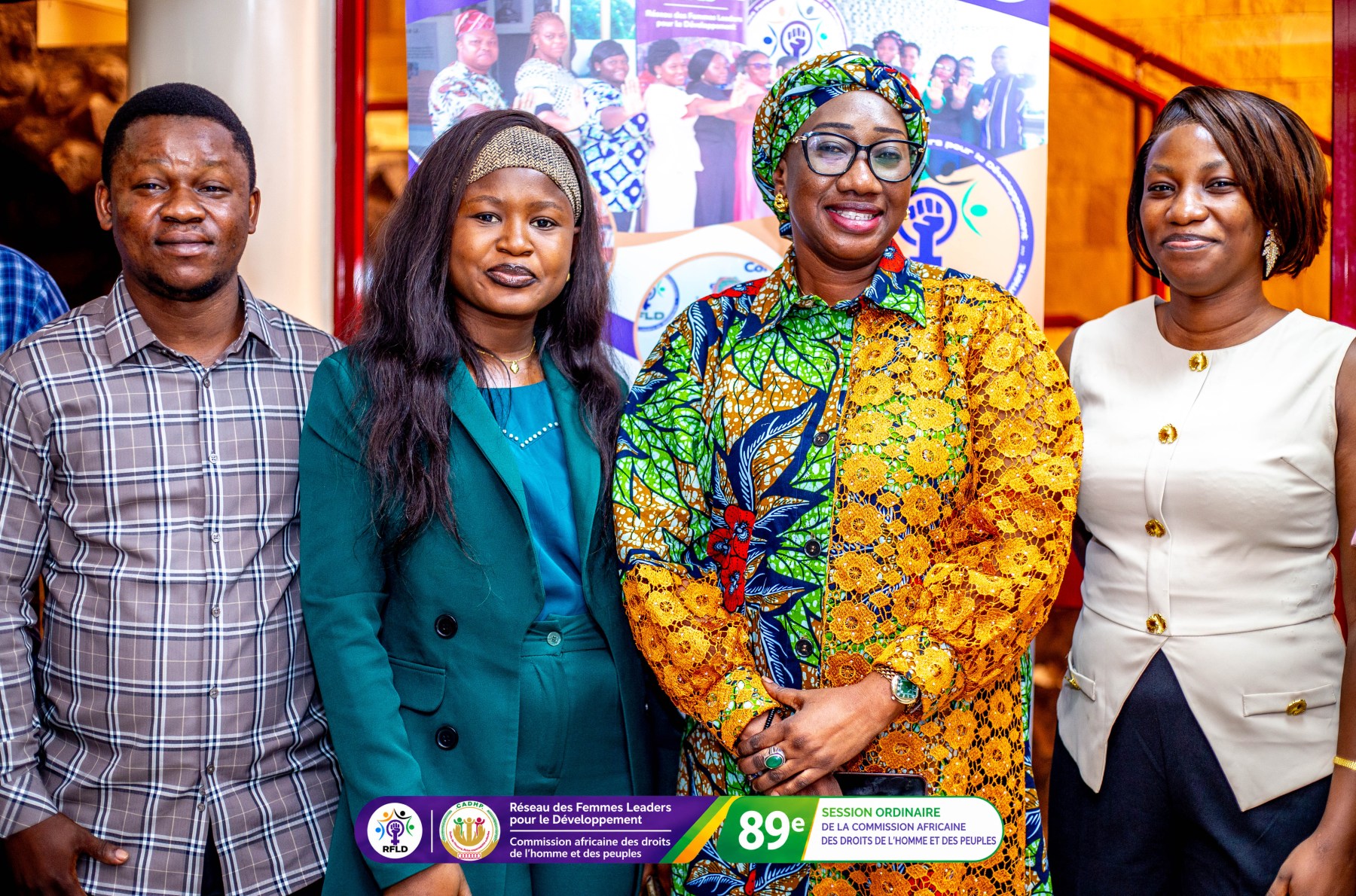
Maputo ProtocolProtocole de Maputo
Ratified by 46 of 55 AU statesRatifié par 46 des 55 États de l’UA
Ratification is only the first step.La ratification n’est qu’une première étape.
RFLD at the 89th Ordinary Session of the African Commission, Dakar, 2026Le RFLD à la 89e session ordinaire de la Commission africaine, Dakar, 2026

DataDonnées
Evidence for advocatesDes données pour le plaidoyer
Built from RFLD research.Issues des recherches du RFLD.
RFLD side event, 89th Ordinary Session of the African Commission, Dakar, 2026Événement parallèle du RFLD, 89e session ordinaire de la Commission africaine, Dakar, 2026
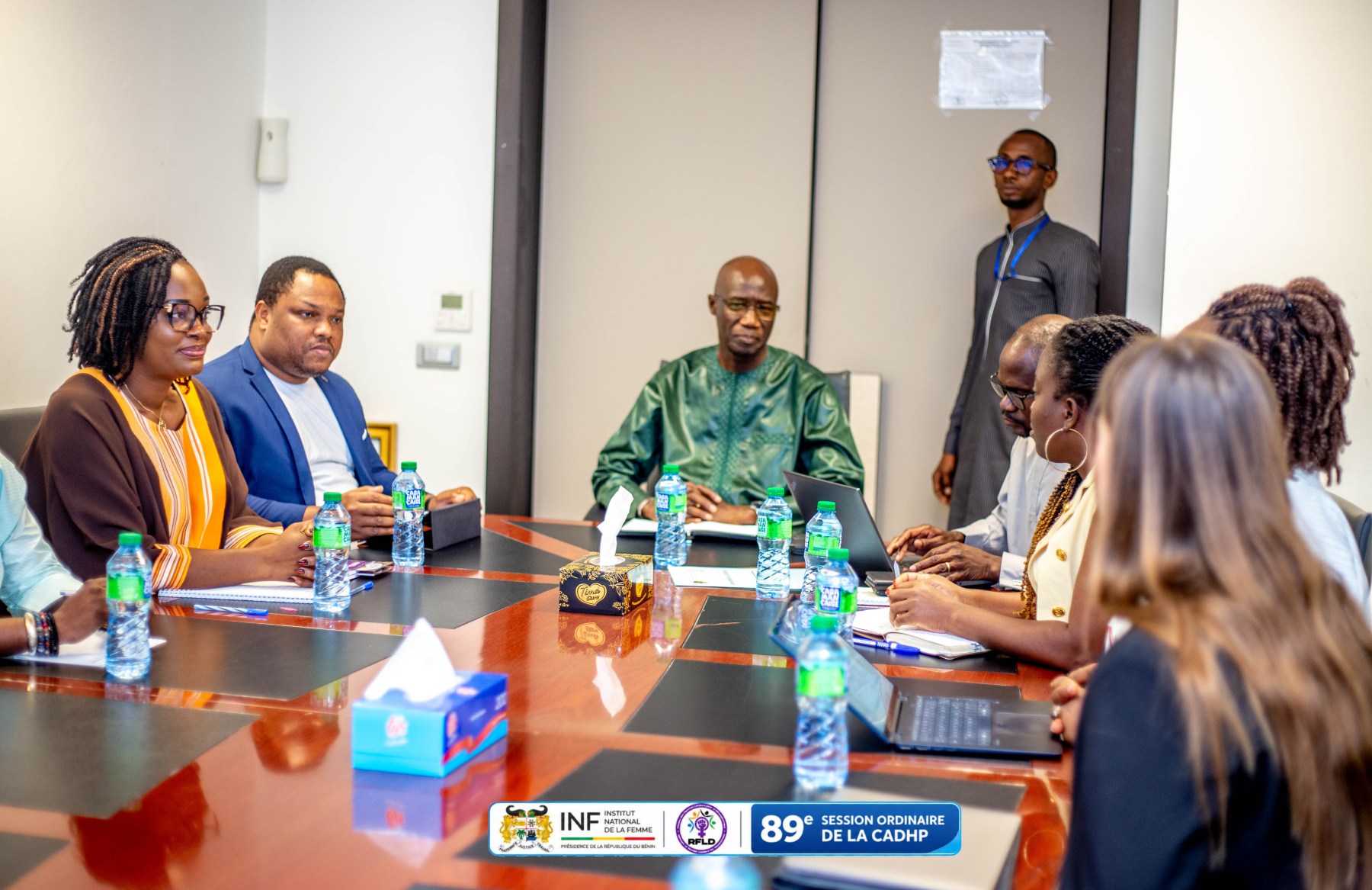
PolicyPolitiques
Tools for decision makersDes outils pour les décideurs
Clear priorities for each country.Des priorités claires pour chaque pays.
Meeting at the Ministry of Justice, Senegal, 2026Rencontre au ministère de la Justice, Sénégal, 2026
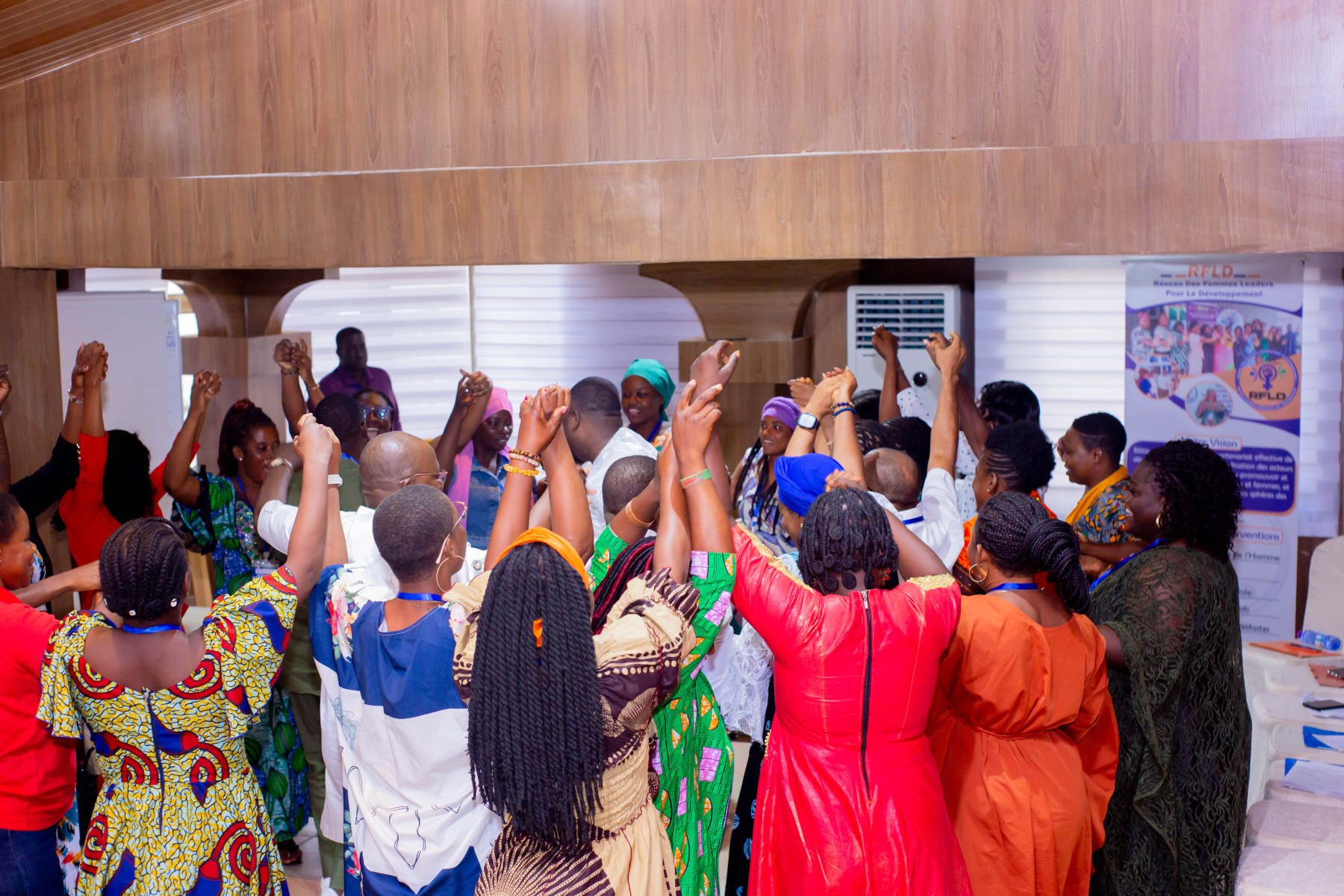
Use themUtilisez-les
Free to read and shareLibres de lecture et de partage
In English and French.En français et en anglais.
RFLD network gathering, 2026Rencontre du réseau RFLD, 2026
Why this matters nowPourquoi maintenant
The urgent need, and how we respondL’urgence, et notre réponse
Why it is urgentPourquoi c’est urgent
Advocates and officials need reliable country data to act.Les militantes et les responsables ont besoin de données nationales fiables pour agir.
Why RFLDPourquoi le RFLD
RFLD’s Maputo Barometer 2026 covers 49 countries: only 3 are green on all three indicators.Le Baromètre de Maputo 2026 du RFLD couvre 49 pays : seuls 3 sont au vert sur les trois indicateurs.
How we respondComment nous agissons
Our fact sheets turn research into clear, country-level priorities.Nos fiches transforment la recherche en priorités claires par pays.
Use the sheets today to push for change where it is needed most.Utilisez les fiches dès aujourd’hui pour faire avancer le changement là où il le faut le plus.
Country fact sheets: women’s rights in law and practiceFiches pays : les droits des femmes dans la loi et dans les faits
One page per country on women’s rights in law and practice: indicators, treaties, ten laws and their gaps, reforms recommended.
Last updated · November 5, 2026
One page per country on women’s rights in law and practice. Each fact sheet brings together key indicators, treaty commitments, ten laws that matter for women with the gaps recorded for each, recent developments and the reforms recommended by the African Commission, UN treaty bodies and national organisations. Each one can be printed or saved as a PDF.
The first ten cover francophone and lusophone West Africa. More will follow, drawn from RFLD’s legal profiles of all 55 African Union member states.
Guinea-Bissau: no data during the transition. Source: RFLD legal profiles.

Available fact sheets
- Benin
Women in National Assembly (2026): 25.7% (28 of 109) · Women in Senate (2026): 8.0% (2 of 25) - Burkina Faso
Women in Transitional Legislative Assembly (2026): 19.0% · World Bank WBL 2026 legal frameworks index (2026): 67.40 - Côte d’Ivoire
Women in National Assembly (2025): 14.9% (38 of 255) · Women in Senate (2023): 24.5% (24 of 98) - Guinea
Women in National Assembly (2026): 40.8% (60 of 147) · Minimum legal age of marriage, with presidential exceptions (2008): 18 - Mali
Women in National Transitional Council (appointed) (2026): 30.1% · Minimum legal age of marriage (2011): 16 for girls, 18 for boys - Niger
Women in the transitional council (2026): 19.6% (38 of 194) · Women married before 18 (2012): 76% - Senegal
Women in National Assembly (2026): 41.2% (68 of 165) - Togo
Women in National Assembly (2026): 21.6% (24 of 111) - Guinea-Bissau
Women in the appointed transition council: No data (2026) · Minimum legal age of marriage: 18, or 16 with parental consent - Cabo Verde
Women in National Assembly (2026): 47.2% (34 of 72) · World Bank WBL 2026 legal frameworks index (2026): 75.03
Use them
Quote them in alternative reports, CEDAW and UPR submissions, briefings for parliamentarians and journalists, and grant proposals. Compare countries in the West Africa legal scorecard 2026, and see how data changed laws in our register of laws and policies.
Last checked: October 2026. Corrections: programs@rflgd.org.

How each fact sheet is built
Each fact sheet follows the same structure: the main laws protecting women’s rights, key figures, the most important gaps, and what RFLD and its members ask of the authorities. Legal information comes from adopted and published texts; figures come from public national and international sources named on each sheet. Sheets reflect the situation as of October 2026.

Using a fact sheet in a meeting
The sheets are designed to be printed on a single page and left with a parliamentarian, a ministry official, a judge or a donor. Before a meeting, choose the one or two gaps most relevant to your audience, bring the official reference of the law you are discussing, and propose a concrete next step: a bill, a decree, a budget line or a hearing.
For the regional picture, use the West Africa legal scorecard.

Key dates for advocates
Moments in the coming months when the fact sheets can support advocacy:
- 25 November – 10 December 2026: 16 Days of Activism against gender-based violence (RFLD campaign).
- 1 December 2026: GivingTuesday (support RFLD).
- March 2027: 71st session of the UN Commission on the Status of Women (CSW71), New York.
- 11 July 2027: anniversary of the Maputo Protocol and next update of the Maputo Barometer.
- All year: CEDAW and UPR reviews of African states (see the calendar) and sessions of the African Commission on Human and Peoples’ Rights.

For journalists and researchers
You may quote and reproduce the fact sheets with attribution to the Women Leaders Network for Development (RFLD) and a link to this page. For interviews, data requests or country experts, write to communications.info@rflgd.org. Logos, the organisational profile and spokespeople are in our press kit.
- Please cite the date you consulted the page: our data is updated as laws change.
- Do not identify survivors, participants or defenders without their informed consent.
- For figures across all 55 African countries, use our laws in 55 countries profiles and the Data Center.

Glossary
- ECOWAS
- Economic Community of West African States, the 15-member regional bloc covered by our West Africa tools.
- Maputo Protocol
- Protocol to the African Charter on Human and Peoples’ Rights on the Rights of Women in Africa, adopted on 11 July 2003.
- CEDAW
- UN Convention on the Elimination of All Forms of Discrimination against Women; its Committee reviews states periodically.
- UPR
- Universal Periodic Review, the UN Human Rights Council peer review of every state’s human rights record.
- ACHPR
- African Commission on Human and Peoples’ Rights, based in Banjul, which receives state and alternative reports.
- Minimum age of marriage
- The legal age below which marriage is not allowed; we note any exceptions in the law.
- Gender-based violence (GBV)
- Violence directed at a person because of their gender, including sexual, physical, psychological and economic violence.

Help us add and update fact sheets
- Send a correction or a new text: write to programs@rflgd.org with a link to or copy of the official text.
- Become a member: women-led organisations can join the network and use the fact sheets in their own advocacy.
- Learn: take a free certified course at the RFLD Academy.
- Support: give to RFLD so we can keep this data open and free.
Frequently asked questions
Which countries are covered?
Benin, Burkina Faso, Côte d’Ivoire, Guinea, Mali, Niger, Senegal, Togo, Guinea-Bissau and Cabo Verde. More will follow.
Can I print a fact sheet?
Yes. Each fact sheet has a “Print or save as PDF” link.
How often are they updated?
They are checked against RFLD’s legal profiles and updated for the Maputo Barometer each July.
Cite and share
How to cite: RFLD (2026). Country fact sheets: women’s rights in law and practice. Réseau des Femmes Leaders pour le Développement. https://rflgd.org/country-fact-sheets/ (accessed [date]).
Free to quote and share with attribution. Corrections: programs@rflgd.org.
Advance gender justice with RFLD
A pan-African network of 1,143 member organisations across 35+ countries: advocacy, research, re-granting and direct service delivery.
For funders and partnersPour les bailleurs et les partenaires
Fund the women who defend rights in Africa, nowFinancez maintenant les femmes qui défendent les droits en Afrique
Aid to women’s organisations is falling. RFLD moves funding fast to women-led organisations and defenders, in French and English, through a network of 1,143 member organisations in more than 35 African countries.L’aide aux organisations de femmes recule. Le RFLD achemine vite les financements vers les organisations de femmes et les défenseures, en français et en anglais, grâce à un réseau de 1 143 organisations membres dans plus de 35 pays africains.
RFLD currently serves as Co-Chair of the SEA-T Programme Advisory Council, mandated to ensure the programme’s direction, priorities, and resources are meaningfully aligned with the visions of African women-led civil society. The SEA-T Programme is funded by the German Federal Ministry for Economic Cooperation and Development (BMZ) and implemented by the Deutsche Gesellschaft für Internationale Zusammenarbeit (GIZ) GmbH.Le RFLD assure actuellement la coprésidence du Conseil consultatif du programme SEA-T, chargé de veiller à ce que l’orientation, les priorités et les ressources du programme soient réellement alignées sur les visions de la société civile africaine portée par les femmes. Le programme SEA-T est financé par le ministère fédéral allemand de la Coopération économique et du Développement (BMZ) et mis en œuvre par la Deutsche Gesellschaft für Internationale Zusammenarbeit (GIZ) GmbH. See the partnershipVoir le partenariat
- 1,143member organisationsorganisations membres
- 35+African countriespays africains
- N°553ACHPR observer statusstatut d’observateur CADHP
- CandidPlatinum Seal of Transparency 2026Sceau de transparence Platine 2026
DonateFaire un don Partner with RFLDDevenir partenaire See our financialsVoir nos états financiers