

ResultsRésultats
Laws and policies we helped changeLes lois et politiques que nous avons aidé à changer
Evidence-based advocacy with members and allies.Un plaidoyer fondé sur des preuves avec nos membres et alliés.
Meeting at the Ministry of Justice, Senegal, 2026Rencontre au ministère de la Justice, Sénégal, 2026

MinistriesMinistères
Working with institutionsTravailler avec les institutions
Dialogue with ministries of justice, family and health.Dialogue avec les ministères de la justice, de la famille et de la santé.
Meeting at the Ministry of Justice, Senegal, 2026Rencontre au ministère de la Justice, Sénégal, 2026
ContinentalContinental
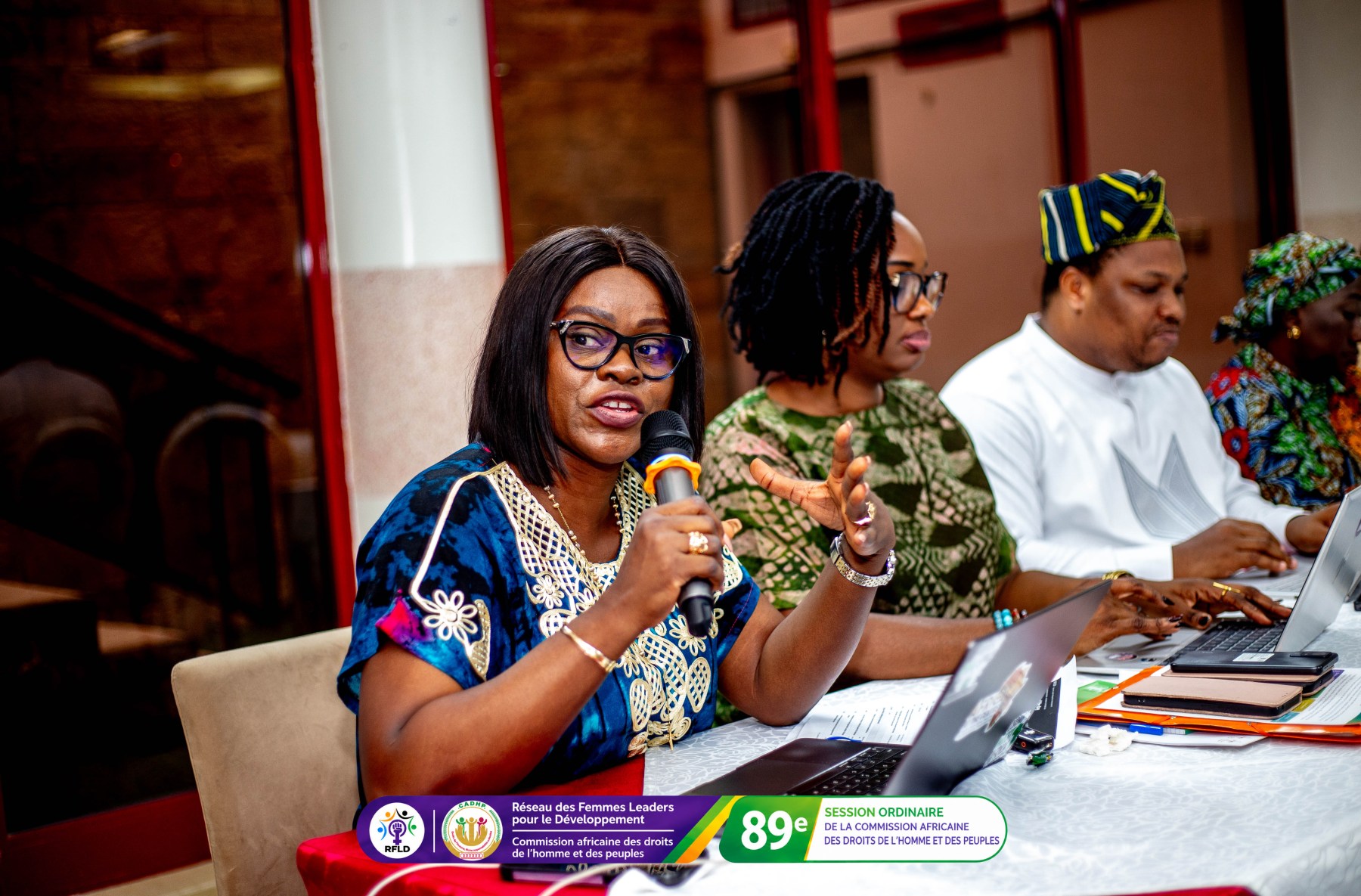
Standards set at African levelDes normes fixées à l’échelle africaine
Using the Maputo Protocol and African Commission recommendations.En utilisant le Protocole de Maputo et les recommandations de la Commission africaine.
RFLD at the 89th Ordinary Session of the African Commission, Dakar, 2026Le RFLD à la 89e session ordinaire de la Commission africaine, Dakar, 2026

ImplementationMise en œuvre
From adoption to applicationDe l’adoption à l’application
Training officials so laws are used.Former les responsables pour que les lois soient appliquées.
Advocacy workshop with health officials, Benin, 2026Atelier de plaidoyer avec des responsables de la santé, Bénin, 2026
EvidenceDonnées
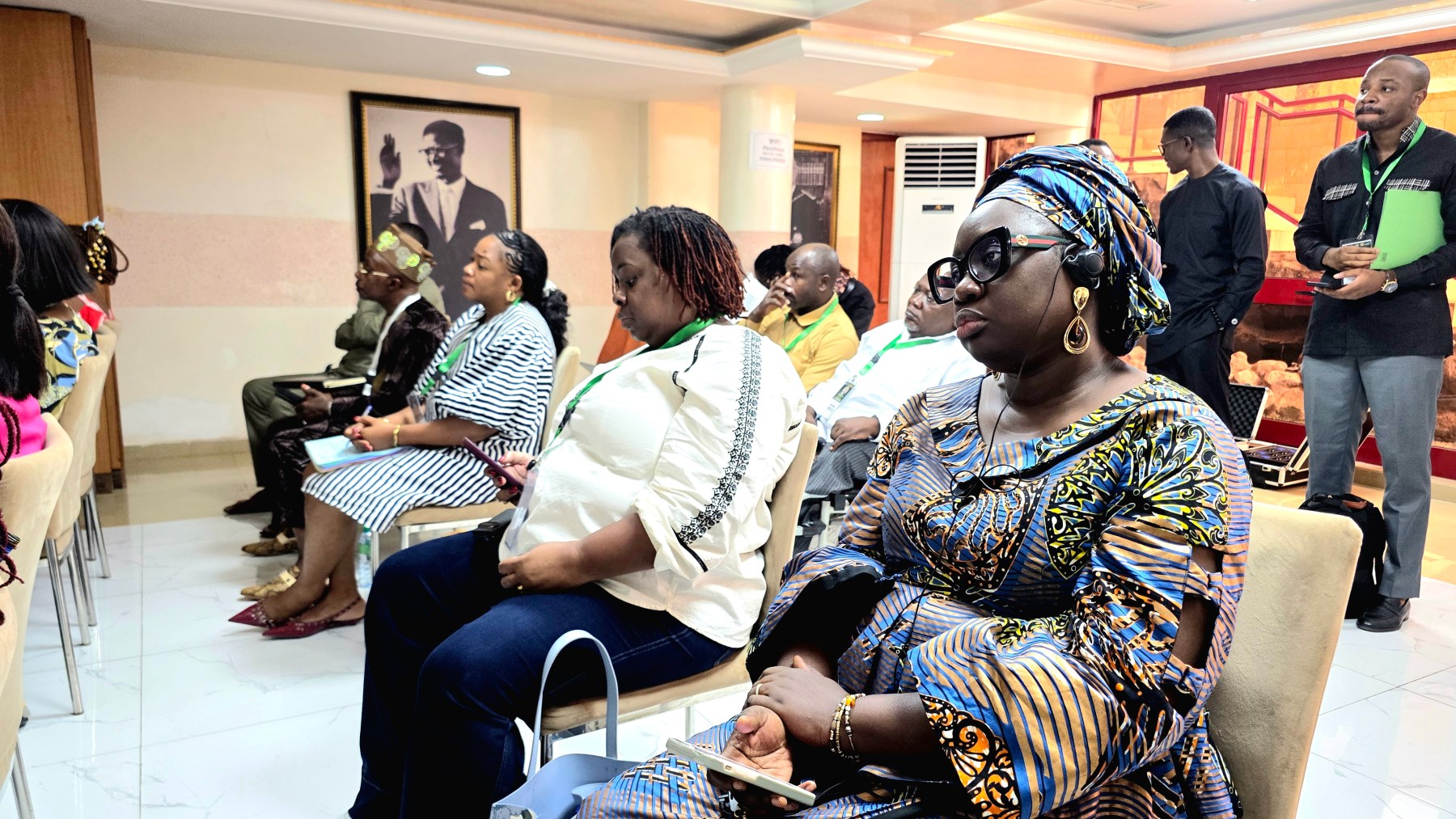
Proof that drives reformDes preuves qui font avancer les réformes
Data from members and the Maputo Barometer.Les données des membres et du Baromètre de Maputo.
RFLD side event, 89th Ordinary Session of the African Commission, Dakar, 2026Événement parallèle du RFLD, 89e session ordinaire de la Commission africaine, Dakar, 2026
Why this matters nowPourquoi maintenant
The urgent need, and how we respondL’urgence, et notre réponse
Why it is urgentPourquoi c’est urgent
Discriminatory laws still deny women land, inheritance, safety and political voice in many countries.Des lois discriminatoires privent encore les femmes de terres, d’héritage, de sécurité et de voix politique dans de nombreux pays.
Why RFLDPourquoi le RFLD
RFLD combines member evidence, legal analysis and access to continental mechanisms.Le RFLD associe les données des membres, l’analyse juridique et l’accès aux mécanismes continentaux.
How we respondComment nous agissons
We draft proposals, brief lawmakers, train officials and track application after adoption.Nous rédigeons des propositions, informons les législateurs, formons les responsables et suivons l’application après l’adoption.
Each law changed protects women for a generation.Chaque loi modifiée protège les femmes pour une génération.
Laws and policies we helped changeLes lois et les politiques que nous avons contribué à changer
The public register of laws, policies and decisions RFLD contributed to, with the evidence for each.
Last updated · November 5, 2026
We count what we can prove. This register lists the laws, policies and institutional decisions to which RFLD contributed, with the evidence for each. An entry is added only when a public document shows both the change and RFLD’s part in it. Like the counters used by Equality Now and UN Women’s Women Count programme, it tracks systemic change, not only reach.
Last checked: October 2026. Next update: January 2027.
1. Laws on sexual violence and related protections, 2020 to 2026
Since 2020, RFLD and its member organisations have advocated for stronger laws on sexual and gender-based violence in all 15 ECOWAS countries: through national coalitions, alternative reports, meetings with parliamentarians and statements at the African Commission. Eight countries adopted new laws or decrees in that period, or protected an existing one. They are listed below with their reference numbers.
Each box is one law or decree listed in the table below. Source: RFLD legal profiles of each country.
| Year | Country | Law and reference number | What it changed |
|---|---|---|---|
| 2025 | Burkina Faso | Code des personnes et de la famille, adopted on 1 September 2025 | Sets 18 as the minimum age of marriage for girls and boys and makes the consent of both parties the basis of marriage. |
| 2024 | Sierra Leone | Prohibition of Child Marriage Act, 2024 | Prohibits marriage of anyone under 18, regardless of parental consent, with minimum prison terms of 15 years. |
| 2024 | Benin | Décret n° 2024-1275 du 23 octobre 2024 portant réglementation de l’aide juridique | Organises legal aid, a condition for survivors to reach the courts. |
| 2024 | The Gambia | Women’s (Amendment) Act 2015, sections 32A and 32B (ban upheld in July 2024) | The National Assembly upheld the ban on female genital mutilation after a repeal bill. |
| 2023 | Sierra Leone | Employment Act, 2023 (with the Sexual Offences (Amendment) Act, 2019, sections 3 and 37) | Covers sexual harassment in employment. |
| 2022 | Sierra Leone | Gender Equality and Women’s Empowerment Act, 2022 | Sets measures to prevent and respond to gender-based violence and stronger support services for survivors, and a 30% quota for women in public office. |
| 2022 | Sierra Leone | Anti-Human Trafficking and Migrant Smuggling Act, 2022 | Creates a national task force against trafficking and a trust fund for victims. |
| 2022 | Guinea | Loi L/2022/12/CNT du 23 septembre 2022 portant aide juridictionnelle | Organises legal aid for people who cannot pay for justice. |
| 2021 | Benin | Loi n° 2021-11 du 20 décembre 2021 portant dispositions spéciales de répression des infractions commises à raison du sexe des personnes et de protection de la femme | Defines rape (5 to 10 years, life where the victim is under 13), sexual harassment, FGM and forced or early marriage (10 to 20 years). |
| 2021 | Benin | Loi n° 2021-12 du 20 décembre 2021 modifiant la loi n° 2003-04 sur la santé sexuelle et la reproduction | Widens legal access to safe abortion, including after rape or incest and on request up to 12 weeks in cases of distress. |
| 2021 | Côte d’Ivoire | Loi n° 2021-894 du 21 décembre 2021 relative aux mesures de protection des victimes de violences domestiques, de viol et de violences sexuelles autres que domestiques | Sets protection measures for survivors of domestic violence, rape and other sexual violence. |
| 2021 | Liberia | Revised Act to Ban Trafficking in Persons within the Republic of Liberia, 2021 | Criminalises trafficking in persons with minimum sentences of 20 years. |
| 2020 | Senegal | Loi n° 2020-05 du 10 janvier 2020 criminalisant le viol et la pédophilie | Makes rape and paedophilia crimes tried as felonies; before, rape was a crime only when it caused death. |
Reforms still pending
- Mali: A draft law on gender-based violence, under discussion for years; no specific FGM law.
- Niger: A draft revision of the Penal Code on rape, FGM, sexual harassment and wahaya, pending since 2024.
- Nigeria: Adoption of the Violence Against Persons (Prohibition) Act, 2015 by every state.
- The Gambia: The Cyber Crime Bill, 2023, still before the National Assembly in 2025.
- Togo, Ghana, Guinea-Bissau, Cabo Verde: No new law on sexual violence recorded since 2020; advocacy continues.
Reference numbers and contents come from RFLD’s legal profiles, which cite the official text for each law. RFLD’s contribution is recorded in its programme records for 2020 to 2026. RFLD says “contributed”: each of these laws was the result of work by many actors, led by national women’s organisations.


2. Decisions of the African Commission
| Date | Decision | Why it matters |
|---|---|---|
| October 2026 | RFLD’s panel “Defending without being exposed” placed on the main agenda of the 89th Ordinary Session, convened by the Special Rapporteur on Human Rights Defenders. | Recommendations to the Commission, States and funders now on record. Policy brief |
| November 2024 | RFLD joined the Support Group to the Special Rapporteur on Human Rights Defenders (Resolution 602). | A channel to document reprisals against women defenders. |
| May 2023 | The Commission granted RFLD Observer Status N°553. | RFLD can speak at sessions and submit alternative reports. Achievements |
3. Reforms in progress
| Since | Country or body | What RFLD is asking | Status |
|---|---|---|---|
| 2022 | Niger | Ratify the Maputo Protocol (advocacy missions in May 2022 and March 2024; Protocol translated into Hausa and Zarma). | Signed 2004, not ratified |
| 2025 | Benin | A second-generation National Action Plan on Resolution 1325, women, peace and security. | Under discussion |
| 2026 | African Union | A regional framework against technology-facilitated gender-based violence. | Under discussion |
How we decide what counts
- The change must be official: a law, decree, policy, budget line or decision by a court or a treaty body.
- A public source must show RFLD’s part: a statement by the institution, a coalition record or RFLD’s own published account at the time.
- We say “contributed”. Laws change because many actors push together.
Members and partners who hold evidence of a change RFLD contributed to can send it to programs@rflgd.org. See also the West Africa legal scorecard 2026 and our country fact sheets.

What counts as an RFLD contribution
We list a law only once it has been formally adopted and published, with its official reference number. RFLD’s contribution may include taking part in drafting consultations and validation workshops, advocacy with parliamentarians and ministries, alternative reports, and campaigns led with our members. These laws are the result of collective work: credit is shared with national women’s organisations, survivors, lawyers, parliamentarians and partners.

Monitoring implementation
For each law, the next steps are implementing decrees, a budget, training of police, prosecutors and judges, services for survivors and public data on cases. RFLD and its members follow these steps and report gaps to national authorities, to the African Commission and to UN treaty bodies.
See country-level detail in our fact sheets and the legal scorecard.

Key dates for advocates
Moments in the coming months when the register can support advocacy:
- 25 November – 10 December 2026: 16 Days of Activism against gender-based violence (RFLD campaign).
- 1 December 2026: GivingTuesday (support RFLD).
- March 2027: 71st session of the UN Commission on the Status of Women (CSW71), New York.
- 11 July 2027: anniversary of the Maputo Protocol and next update of the Maputo Barometer.
- All year: CEDAW and UPR reviews of African states (see the calendar) and sessions of the African Commission on Human and Peoples’ Rights.

For journalists and researchers
You may quote and reproduce the register with attribution to the Women Leaders Network for Development (RFLD) and a link to this page. For interviews, data requests or country experts, write to communications.info@rflgd.org. Logos, the organisational profile and spokespeople are in our press kit.
- Please cite the date you consulted the page: our data is updated as laws change.
- Do not identify survivors, participants or defenders without their informed consent.
- For figures across all 55 African countries, use our laws in 55 countries profiles and the Data Center.

Glossary
- ECOWAS
- Economic Community of West African States, the 15-member regional bloc covered by our West Africa tools.
- Maputo Protocol
- Protocol to the African Charter on Human and Peoples’ Rights on the Rights of Women in Africa, adopted on 11 July 2003.
- CEDAW
- UN Convention on the Elimination of All Forms of Discrimination against Women; its Committee reviews states periodically.
- UPR
- Universal Periodic Review, the UN Human Rights Council peer review of every state’s human rights record.
- ACHPR
- African Commission on Human and Peoples’ Rights, based in Banjul, which receives state and alternative reports.
- Implementing decree
- A regulation adopted after a law to set out how it is applied in practice.
- Alternative report
- A report by civil society to a treaty body, presented alongside the state’s official report.

Help us complete the register
- Send a correction or a new text: write to programs@rflgd.org with a link to or copy of the official text.
- Become a member: women-led organisations can join the network and use the register in their own advocacy.
- Learn: take a free certified course at the RFLD Academy.
- Support: give to RFLD so we can keep this data open and free.
Frequently asked questions
How does RFLD decide what counts?
The change must be official, and a public source must show RFLD’s part in it. RFLD says “contributed”, because laws change when many actors push together.
How often is the register updated?
Every quarter. The next update is in January 2027.
Can I propose an entry?
Yes. Members and partners who hold evidence of a change RFLD contributed to can send it to programs@rflgd.org.
Cite and share
How to cite: RFLD (2026). Laws and policies we helped change. Réseau des Femmes Leaders pour le Développement. https://rflgd.org/laws-and-policies-we-helped-change/ (accessed [date]).
Free to quote and share with attribution. Corrections: programs@rflgd.org.
Advance gender justice with RFLD
A pan-African network of 1,143 member organisations across 35+ countries: advocacy, research, re-granting and direct service delivery.
For funders and partnersPour les bailleurs et les partenaires
Fund the women who defend rights in Africa, nowFinancez maintenant les femmes qui défendent les droits en Afrique
Aid to women’s organisations is falling. RFLD moves funding fast to women-led organisations and defenders, in French and English, through a network of 1,143 member organisations in more than 35 African countries.L’aide aux organisations de femmes recule. Le RFLD achemine vite les financements vers les organisations de femmes et les défenseures, en français et en anglais, grâce à un réseau de 1 143 organisations membres dans plus de 35 pays africains.
RFLD currently serves as Co-Chair of the SEA-T Programme Advisory Council, mandated to ensure the programme’s direction, priorities, and resources are meaningfully aligned with the visions of African women-led civil society. The SEA-T Programme is funded by the German Federal Ministry for Economic Cooperation and Development (BMZ) and implemented by the Deutsche Gesellschaft für Internationale Zusammenarbeit (GIZ) GmbH.Le RFLD assure actuellement la coprésidence du Conseil consultatif du programme SEA-T, chargé de veiller à ce que l’orientation, les priorités et les ressources du programme soient réellement alignées sur les visions de la société civile africaine portée par les femmes. Le programme SEA-T est financé par le ministère fédéral allemand de la Coopération économique et du Développement (BMZ) et mis en œuvre par la Deutsche Gesellschaft für Internationale Zusammenarbeit (GIZ) GmbH. See the partnershipVoir le partenariat
- 1,143member organisationsorganisations membres
- 35+African countriespays africains
- N°553ACHPR observer statusstatut d’observateur CADHP
- CandidPlatinum Seal of Transparency 2026Sceau de transparence Platine 2026
DonateFaire un don Partner with RFLDDevenir partenaire See our financialsVoir nos états financiers